You are what you eat. My father used to say that all the time, and I’ve spent most of my life believing he was absolutely right.
I’ve always had another expression that I think tells you a great deal about a person’s relationship with food.
Do you eat to live, or do you live to eat?
There is a hell of a difference between those two philosophies. And I don’t have to look very far to see it. My mother and I are almost complete opposites when it comes to food.
She’s 104 years old and has spent most of her life looking forward to her next meal. I’ve spent most of mine thinking about what that meal is going to do for my body.
Same family. Very different priorities.
My Mother Lives to Eat. I Eat to Live.
My mother loves food. Always has.
She thinks about it constantly. What’s for dinner? What are we having tomorrow? What can she look forward to eating next?
Food has been one of the great pleasures of her life. And even at 104, that fascination hasn’t entirely disappeared.
Unfortunately, things have changed for her. Because of her age and physical limitations, she now has to eat a lot of pureed food.
And she fucking hates it.
She complains about it almost every day. To her, not being able to enjoy the foods she loves has taken away something enormously important.
I can understand that. When something has given you pleasure for a century, losing it must be terribly frustrating.
But I’ve never looked at food quite the same way.
I’ve always been more interested in the nutritional value of what I’m eating than the temporary pleasure it gives me.
That doesn’t mean I never enjoyed food. I certainly did. But nutrition was always part of the equation.
My Father Taught Me That You Are What You Eat
My father had a tremendous influence on how I think about health.
He was always reminding us that you are what you eat.
That idea stuck with me. Apparently, it didn’t have quite the same effect on my four sisters, who seem to have developed eating habits and attitudes much closer to my mother’s.
Go figure. Five children growing up in the same household, hearing the same messages, and somehow coming away with different philosophies.
My father himself preferred a lot of what we would now call Mediterranean-style eating. My mother was more of a traditional meat-and-potatoes cook.
She made delicious meals, but I remember times when Dad and I were alone and he ate more the way he really wanted to eat.
That raises another interesting question.
How many people spend their lives eating according to their spouse’s preferences rather than their own?
When one person does most of the cooking, the other person may spend decades eating meals they wouldn’t necessarily choose for themselves.
Marriage involves compromise, of course. But I wonder how often that compromise extends to our health without us giving it much thought.
I Was a Health Nut Long Before It Was Fashionable
My interest in nutrition goes back a long way.
When I was younger, I became a vegetarian. I grew my own vegetables, cooked my own meals, and paid considerable attention to what went into my body.
I was also a bit of an exercise fanatic.
I practiced yoga early in the morning, before sunrise, sometimes standing on my head for an hour and a half in the dark.
Yes, an hour and a half. I wasn’t exactly casual about these things.
I was interested in how the body worked, how to keep it functioning properly, and how the things I did every day might affect my health years down the road.
Over time, my eating habits evolved. I no longer remained strictly vegetarian, but I naturally gravitated toward something resembling the Mediterranean diet.
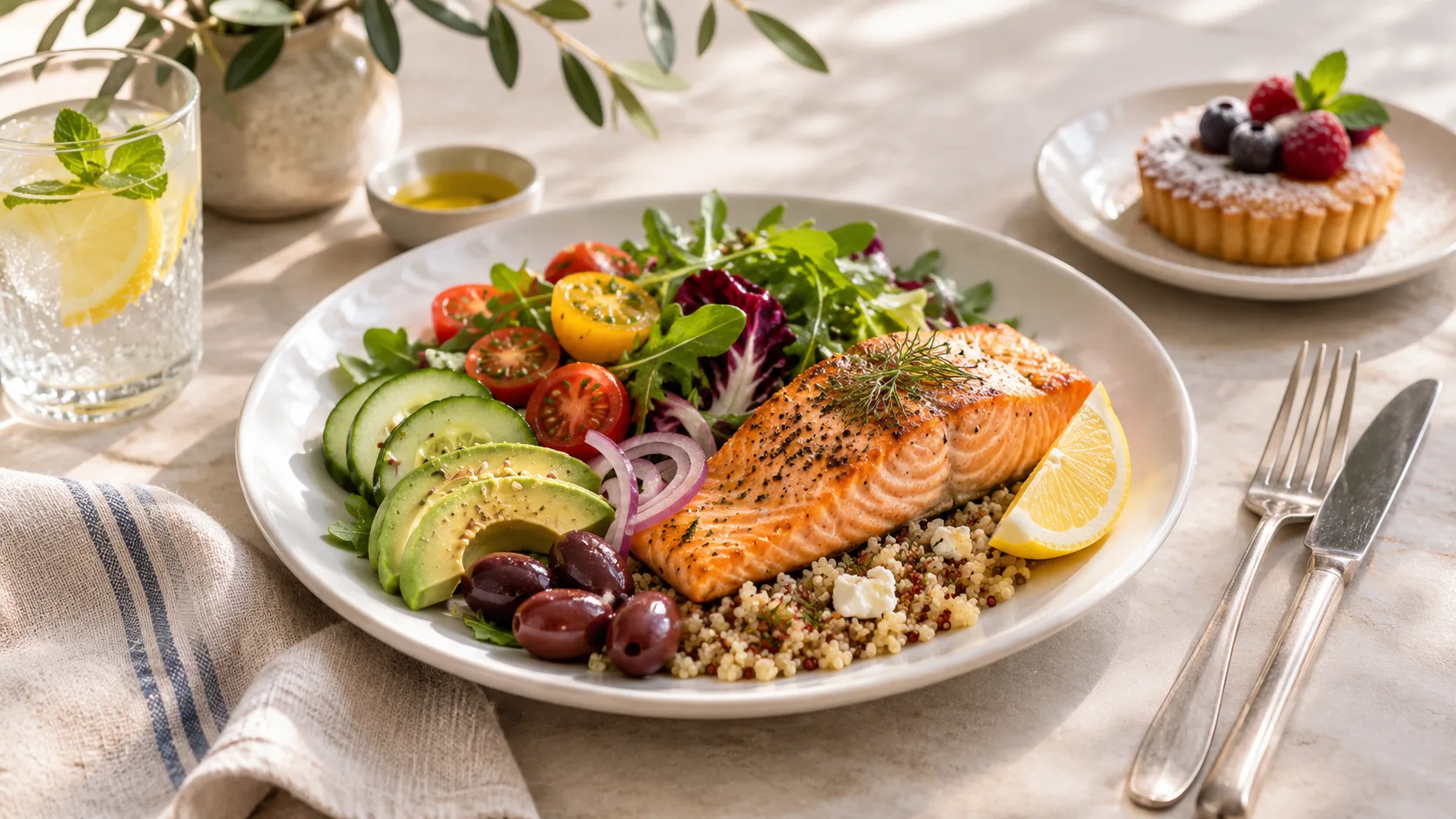
Vegetables, fish, olive oil, salads, and other recognizable foods became the foundation of how I ate.
I didn’t need somebody to invent a fashionable name for it. It simply made sense to me.
And it still does.
I’ve written more about my approach to food in Real Food, Mostly Plants.
Why Do We Always Have Room for Dessert?
Here’s something I’ve never really understood.
People sit down to a perfectly good dinner. Meat, potatoes, vegetables, salad, perhaps some other nutritious foods.
Then, when they’re finished, out comes dessert.
Cake. Pie. Ice cream. Some sugary fucking treat that apparently has to follow a meal.
And sometimes people deliberately eat less of their nutritious dinner because they want to save room for dessert.
I’ve always found that completely counterintuitive.
Why would you sacrifice food that provides valuable nourishment just so you can fill the remaining space with something chosen primarily for its sweetness?
If there’s room for more food, why not have a little more of the good stuff?
I’m not saying that a piece of cake is going to destroy your health. I’m questioning the mentality behind making sugary treats an automatic part of everyday eating.
To me, that’s putting the pleasure of eating ahead of the purpose of eating.
And I think we ought to question that habit instead of simply accepting it because we’ve always done it.
If you start filling up on fucking donuts, you’re gonna turn into a fucking donut.
All right, not literally. But you get my point.
What Happened to My Own Enjoyment of Food?
Now here’s where my story takes an unexpected turn.
Although I’ve always believed in eating for health, I wasn’t always indifferent to food.
There was a time when I experienced real hunger. I had cravings. I enjoyed going to restaurants with friends, looking forward to a good meal, and participating in the social experience surrounding food.
I enjoyed all of that.
But after the health problems I associate with mercury exposure and my subsequent detoxification experiences, things changed dramatically.
And not just my appetite.
My taste, touch, physical sensations, emotions, sleep, and the way I experienced pleasure all seemed to change.
Today, I rarely feel hungry. I don’t experience the cravings I once did. And I generally don’t look forward to eating.
Quite frankly, eating has become a fucking chore.
I still prepare nutritious meals because I believe my body needs them. But the anticipation and enjoyment I once experienced are largely gone.
That’s an enormous difference.
I’ve practiced fasting for more than 50 years, and these days I often find that I feel better while fasting than I do when I’m eating.
My mother can’t imagine voluntarily going without food. I can actually look forward to it.
Two completely different experiences.
I believe mercury played a major role in changing the way my body and mind function. I’ve spent years trying to understand what happened, and I suspect there may be other people experiencing changes they haven’t been able to explain.
I’ve discussed that history in Could Mercury Exposure Be Behind Your Unexplained Symptoms?.
Eating for Health Isn’t About Following a Diet
There’s another point I want to make.
I don’t believe healthy eating should be something you do for six weeks because you want to lose ten pounds.
It should be part of how you live.
I’ve never been particularly interested in following the latest fashionable diet. My philosophy has always been simpler.
Give your body the raw materials it needs to function properly.
Eat real food. Include plenty of plants. Pay attention to what you’re consuming. Learn to prepare your own meals. And stop pretending that everything marketed as food deserves a permanent place in your stomach.
There’s good research supporting the health benefits of Mediterranean-style eating. For example, a published review examining cardiovascular outcomes found that greater adherence to this eating pattern was associated with better cardiovascular health.
You can read the Mediterranean diet research on PubMed.
That doesn’t mean everybody should eat exactly as I do.
But I believe people should at least understand why they’re eating what they’re eating.
Food Is a Choice We Make Every Day
Most of us make decisions about food several times a day, year after year.
And those decisions add up.
We can choose food primarily because it tastes wonderful, because it’s convenient, because we’ve always eaten it, or because somebody else put it in front of us.
Or we can give some thought to what our bodies actually need.
That doesn’t mean never enjoying a delicious meal. I remember very well what that pleasure was like, and I wouldn’t begrudge anyone the experience.
But I do think we should stop treating nutrition as an afterthought.
I’ve written about taking the first steps toward healthier habits in How to Get Healthy: Where Do You Start?.
Sometimes the best place to begin is simply questioning habits you’ve never questioned before.
So, Do You Eat to Live or Live to Eat?
My mother and I have spent our lives approaching food from opposite directions.
At 104, food still occupies an enormous place in her thoughts. For me, it’s something I approach primarily as nourishment, especially now that so much of my former appetite and enjoyment has disappeared.
And my father, who lived to 96, left me with a philosophy that has influenced me for most of my life.
You are what you eat.
I can’t tell you that following my approach guarantees a longer life. My own mother is a pretty remarkable example of how complicated longevity can be.
But I’ve never believed that taking responsibility for your health should depend on some guarantee.
I believe the choices we make about food matter.
So the next time you sit down to eat, maybe ask yourself a simple question.
Am I eating this because my body needs it, or simply because I want it?
There’s nothing wrong with enjoying your food.
Just don’t forget what you’re eating it for.
Insure Your Health Yourself.