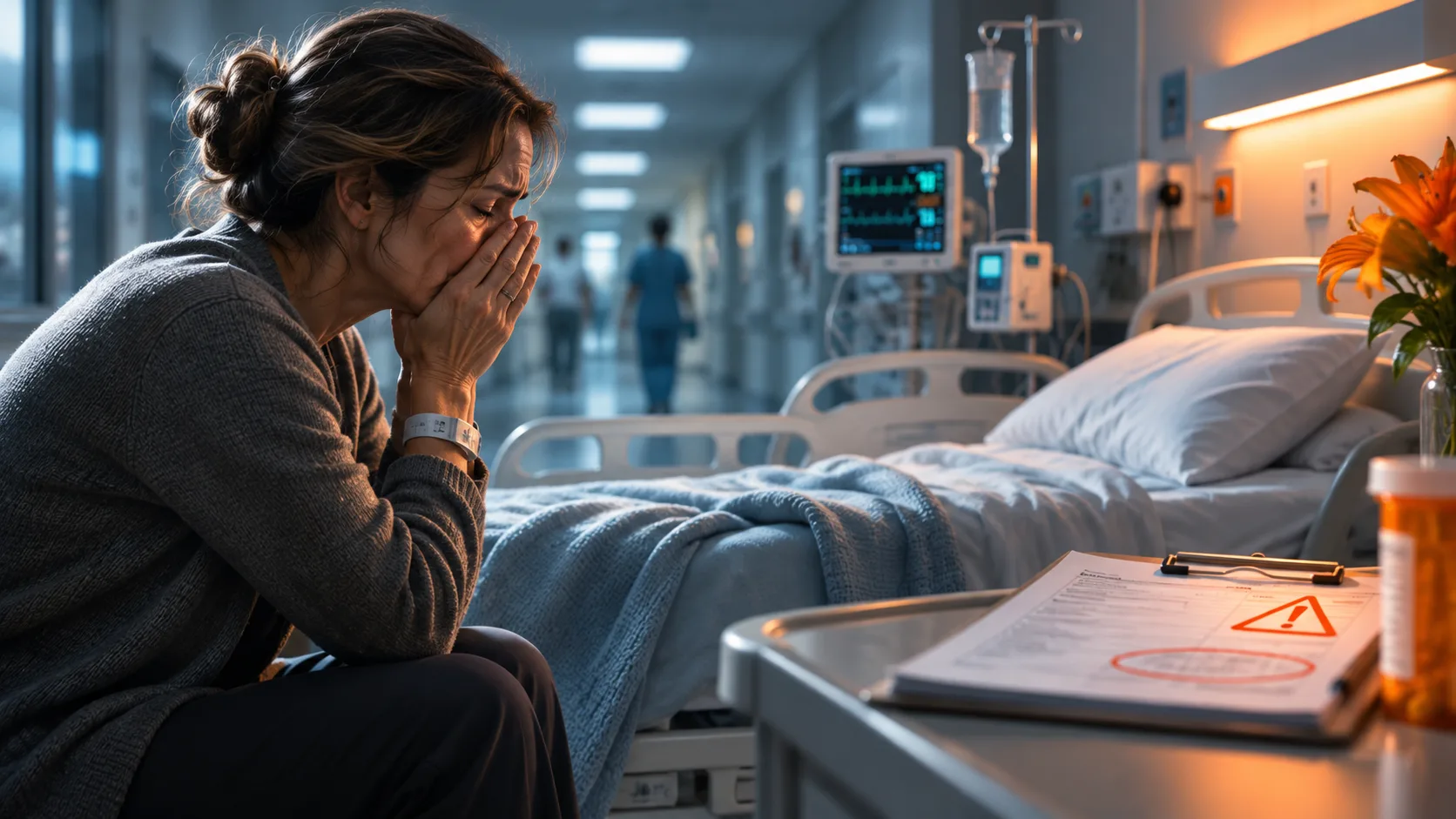
Medical errors in hospitals are something most of us probably don’t think about until something goes terribly wrong. We go to the hospital expecting to get better, not wondering whether the treatment itself might cost us our lives.
But sometimes that’s exactly what happens.
A very dear friend of mine, Michael Dubrule, went into a hospital in Luxembourg for routine cancer treatment. Five days later, he was dead from sepsis.
His wife, Mary, was there throughout those five days. She kept me informed about what was happening as Michael’s condition deteriorated. I was back in Canada, receiving updates and finding it increasingly difficult to believe what I was hearing.
And then he was gone.
Just like that.
I’m still in shock. Michael was one of the most creative, outrageous, wonderful human beings I’ve ever known. Losing him this way has only reinforced something I’ve believed for a long time: We put an enormous amount of trust in a healthcare system that doesn’t always deserve our unquestioning confidence.
And Michael’s death has left me asking a question I can’t get out of my head.
How can someone walk into a hospital for treatment and never walk out?
The Man I Knew as the Dubruler
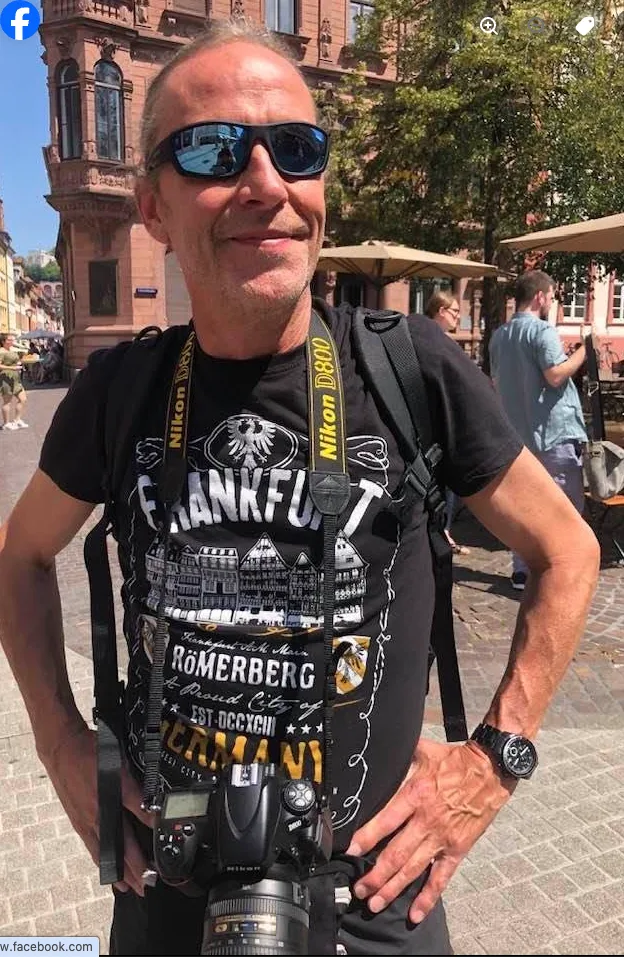
Before we get into the medical statistics, I want to tell you a little about the man we lost.
We called him the Dubruler.
Michael Dubrule was probably the most creative motherfucker I’ve ever known. He was a photographer, a painter, a musician and an all-around wild character. He played trumpet—not necessarily brilliantly, but with enthusiasm. And when Michael got interested in something, he threw himself into it.
Photography was his great passion. Years ago, he was developing film in his bathtub with a red light. That’s how dedicated he was to doing things his own way.
He lived for years above the clubs on Queen Street in downtown Toronto. His place became a gathering spot for musicians, artists and anybody else who happened to be part of that wonderfully crazy scene.
I spent some of the best times of my life there.
In 2008, Michael lost his longtime home in the devastating Queen Street fire. Friends and musicians came together to organize a benefit concert for him. I was among the musicians who participated.
Later, Michael made a new life in Luxembourg, where he continued his photography and found a special relationship with Mary.
He was full of piss and vinegar, full of ideas and full of life.
And that’s the man who went into a hospital for treatment and never came home.
Medical Errors in Hospitals: How Big Is the Problem?
When I started looking into medical errors in hospitals, some of the figures were enough to make my blood boil.
In 2022, the U.S. Department of Health and Human Services released findings from a study of hospitalized Medicare patients.
Here’s what they found.
25% of hospitalized Medicare patients experienced an adverse event or temporary harm during the hospital stays studied.
Of those harmful events, 43% were judged preventable through better care.
Think about that for a minute.
We’re talking about patients who entered hospitals to receive treatment, and a substantial number experienced some additional harm during their stay.
These figures came from Medicare hospitalizations in October 2018. They aren’t a measure of every hospital patient, and not every harmful event was malpractice. But they expose a problem that deserves a hell of a lot more attention.
Another study, published in the New England Journal of Medicine, examined 2,809 hospital admissions. Researchers found adverse events in 23.6% of admissions, with preventable adverse events occurring in 6.8%.
And these aren’t numbers from some anti-medicine conspiracy website. They’re from serious investigations into patient safety.
Canada Isn’t Immune Either
We Canadians sometimes look at American healthcare and think our system must be safer because it’s publicly funded.
But the problems don’t stop at the border.
The Canadian Institute for Health Information reported that during 2024–2025, approximately one in every 17 hospitalizations involved at least one instance of unintended harm.
That represented about 153,000 hospital stays.
One in seventeen.
Those figures don’t mean every incident involved negligence. They do mean that medical harm is a significant problem in Canadian hospitals, too.
And behind every one of those numbers is a real person, often with a family watching helplessly as something goes wrong.
Sepsis: When an Infection Becomes Deadly
Sepsis is what took Michael’s life.
It’s a dangerous condition in which the body’s response to an infection becomes so extreme that organs can begin to fail. It can progress frighteningly fast.
According to the U.S. Centers for Disease Control and Prevention, approximately 1.7 million American adults develop sepsis every year.
At least 350,000 adults with sepsis die during hospitalization or are discharged to hospice annually.
That’s a staggering number.
Now, most cases of sepsis begin before a patient gets to the hospital. So these figures don’t mean that hospitals caused all those infections.
But infections can also develop in healthcare settings, and sepsis can follow medical procedures, surgery or other serious illnesses.
What makes this especially disturbing is how quickly the situation can become critical.
Fever or unusually low temperature, confusion, rapid breathing, a racing heart, extreme discomfort and sudden deterioration can all be warning signs. Suspected sepsis requires immediate medical attention because delays in effective treatment can have devastating consequences.

Mary watched Michael’s condition deteriorate over those five days in Luxembourg. She was there. She saw it happening and kept me informed.
I wasn’t in that hospital. I don’t know everything that happened between the time Michael arrived and the time he died.
But I know what Mary told me, and I know what happened to my friend.
He went in for routine cancer treatment. Five days later, he was dead from sepsis.
That’s a sequence of events I will never forget.
How Much Medical Harm Could Be Prevented?
This is the question I keep coming back to.
Not everything that goes wrong in a hospital is somebody’s fault. Complications can happen even when people receive appropriate care.
But what about the things that really could have been prevented?
Medication mistakes. Infections acquired during treatment. Procedures that go wrong. Failures in communication. Warning signs that aren’t recognized quickly enough.
These are all established patient-safety concerns.
The World Health Organization estimates that approximately one in ten patients experiences harm in healthcare worldwide and that more than half of that harm is preventable.
That’s not some minor administrative problem.
That’s human suffering on an enormous scale.
And the consequences can follow people for the rest of their lives—or end their lives altogether.
I believe the entire healthcare system should be asking a much tougher question: What could we have done to prevent this?
Not after a tragedy. Before it happens.
Medical Malpractice, Mistakes and Accountability
There’s an important difference between a medical complication, a preventable error and medical malpractice.
A complication doesn’t automatically mean someone was negligent. Malpractice generally involves a failure to meet an accepted standard of care that causes harm.
But the fact that not every bad outcome qualifies as malpractice doesn’t make the problem disappear.
When a patient suffers preventable harm, shouldn’t there be serious questions about what happened, what could have been done differently and who is responsible for making sure it doesn’t happen again?
And why should patients and families have to fight so hard to understand what went wrong?
I don’t believe we should blindly accept that something terrible happened simply because somebody wearing a white coat tells us it was an unfortunate complication.
Sometimes complications really are unavoidable.
And sometimes people make mistakes.
That’s precisely why we need transparency, accountability and patients who aren’t afraid to ask questions.
Why Do We Put So Much Faith in the System?
I’ve been questioning modern medicine for years.
My own health experiences taught me what it feels like to seek answers and come away frustrated, confused and disappointed.
I’ve written about why I’ve given up on the modern medical system, and I’ve also asked what happens when you know more about your own health problems than your doctor seems to understand.
My frustration isn’t simply with individual doctors. It’s with a system that often seems more focused on treating what has already gone wrong than helping people remain healthy in the first place.
We spend enormous amounts of money on hospitals, drugs, procedures and treating disease.
But what about prevention?
What about helping people understand their bodies before they’re facing a serious medical crisis?
What about encouraging people to become active participants in decisions about their health instead of simply doing as they’re told?
I believe those questions deserve far more attention.
Your Health Is Too Important to Hand Over Completely
Here’s where my philosophy comes into this.
I’m not suggesting that somebody with sepsis should try to cure it by eating broccoli or taking a walk. Sepsis is a medical emergency, and it requires immediate treatment.
What I’m talking about is everything that happens before we reach that point.
Taking care of ourselves. Learning how our bodies work. Eating real food. Staying active. Maintaining our strength. Questioning unnecessary treatments and understanding the risks before agreeing to medical procedures.
And when treatment really is necessary, asking questions until we understand the answers.
What are the risks? What are the alternatives? What happens if we do nothing? Is another opinion warranted? What signs of complications should we watch for?
Those are reasonable questions, and I believe every patient has a right to ask them.
I’ve written about how to get healthy and start building better habits. I keep coming back to that message because I believe the little things we do every day matter enormously.
Nothing we do guarantees that we’ll never become sick or need medical care.
But I refuse to believe that our only option is to wait until something goes wrong and then hand everything over to somebody else.
Nobody has more at stake in your health than you do.
Michael Deserved More Time
When I think about Michael, I don’t want the first thing that comes to mind to be a hospital bed in Luxembourg.
I want to remember the Dubruler.
The skinny, long-haired, wildly creative fellow who could turn an ordinary evening into something unforgettable.
The photographer who loved his cameras. The trumpet player who gave it everything he had. The man whose Queen Street apartment welcomed an extraordinary collection of musicians, artists and friends.
The friend who could make me laugh until my stomach hurt.
And the man who found happiness with Mary in Luxembourg.
That’s who Michael was.
His death has left a hole in the lives of many people who loved him, and I’m still trying to come to terms with it.
I can’t change what happened to Michael. But I can talk about it. I can ask questions. And I can encourage other people to think more carefully about the decisions they make concerning their health.
If telling Michael’s story causes even one person to ask another question, seek another opinion or pay closer attention to their own healthcare, then perhaps something worthwhile can come from this terrible loss.
Michael Dubrule deserved more time.
And every patient deserves the safest care possible.
That’s why I keep saying it:
Insure Your Health Yourself.
Sources Behind the Figures
U.S. Department of Health and Human Services, Office of Inspector General — Adverse events and preventable harm among hospitalized Medicare patients.
The Safety of Inpatient Health Care — New England Journal of Medicine study of hospital adverse events.
Canadian Institute for Health Information — Hospital harm in Canada, 2024–2025.
U.S. Centers for Disease Control and Prevention — Sepsis statistics, symptoms and prevention.
World Health Organization — Patient safety, preventable harm and medical errors.