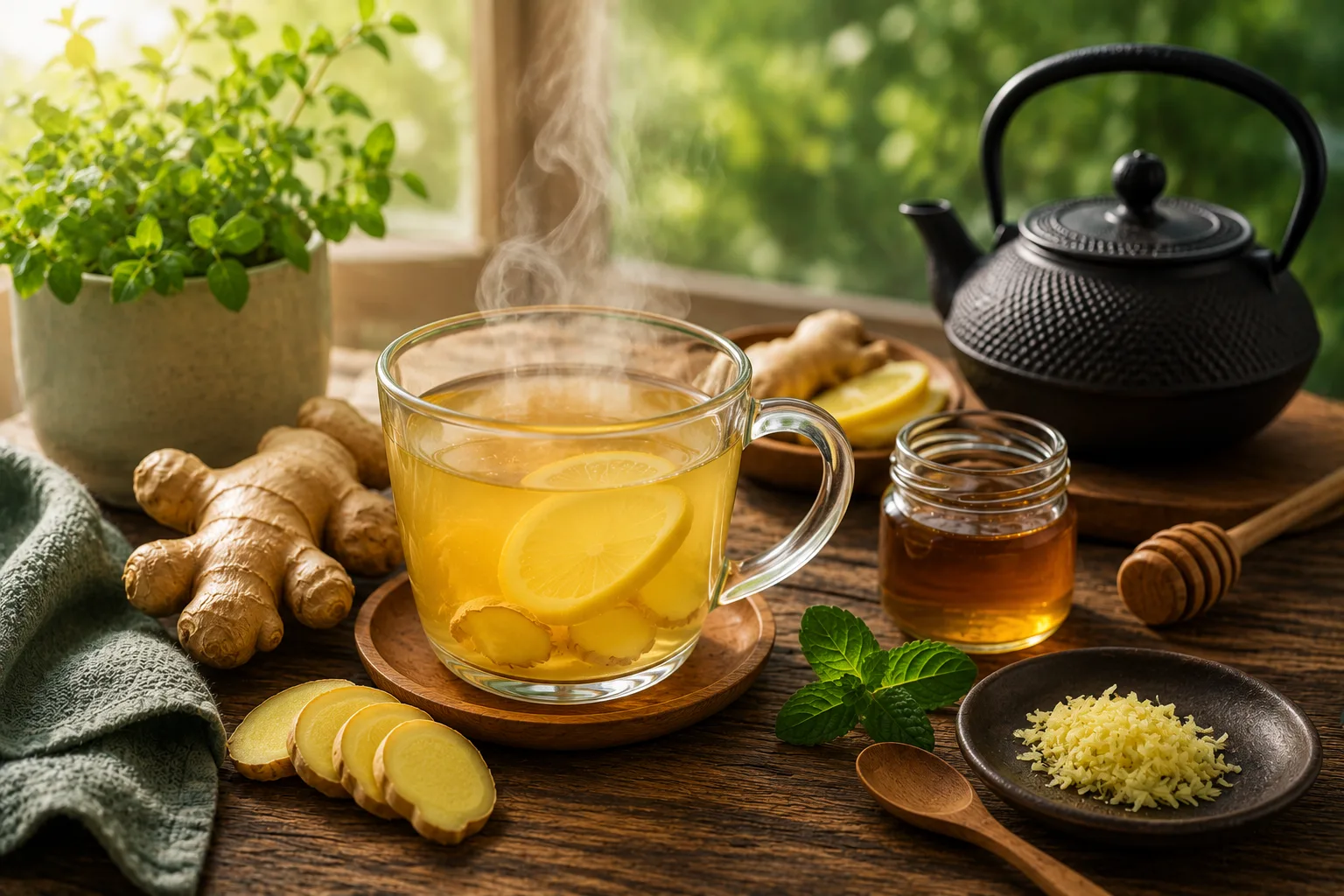
A Simple Drink That Has Become Part of Our Day
Sometimes the simplest things are the ones that stay with you. Ginger tea is one of them. It is warm, easy to make and has that unmistakable bite that lets you know exactly what you are drinking.
My 104-year-old mother drinks ginger tea every day and loves it. When she tells me something makes her feel good, I pay attention. I enjoy it too, especially when I want something warming that does not involve sugar, caffeine or a long list of ingredients.
Why Ginger Has Earned Its Reputation
Ginger has been used in cooking and traditional remedies for generations. Its naturally occurring compounds, including gingerols and shogaols, give ginger its familiar flavour and are being studied for their antioxidant and anti-inflammatory activity.
That does not make ginger a miracle cure, but it helps explain why people have turned to it for so long. This Johns Hopkins overview of ginger discusses some of its most familiar uses, especially for digestion and nausea.
Ginger Tea and Digestion
Ginger is probably best known for helping settle the stomach. Some people find that it helps with nausea, bloating, gas or that uncomfortable feeling after eating too much.
Research into ginger and nausea is encouraging in some areas, particularly nausea associated with pregnancy, but the evidence is not equally strong for every kind of nausea. Many studies also examine ginger supplements rather than an ordinary cup of ginger tea. The National Center for Complementary and Integrative Health provides a sensible summary of what is known and what remains uncertain.
My mother and I do not drink ginger tea because a study tells us to. We drink it because we enjoy it and because it makes us feel good. The research is interesting, but our personal experience is the reason it remains in our routine.
Inflammation, Soreness and Everyday Comfort
Ginger contains compounds that are being studied for their relationship to inflammation. That is one reason people often use ginger when dealing with joint discomfort, menstrual cramps or muscle soreness.
I would not describe a cup of ginger tea as a treatment for arthritis, chronic pain or any other disease. I see it as one small part of a larger approach that includes sensible food, regular movement, rest and paying attention to how your body responds. That is the same basic thinking behind resetting your physiology through food and exercise.
A Healthy Habit Does Not Have to Be a Miracle Cure
I like ginger tea, but I do not need to turn it into magic. Claims that one cup of tea will detoxify your body, burn away fat, prevent infections, clear your skin and protect you from disease go much further than the evidence allows.
Something does not have to cure everything to be worth doing. Ginger tea can be an enjoyable part of a healthy routine, but it cannot replace good nutrition, movement, sleep or common sense. Understanding how nutrition affects the way you feel remains far more important than looking for a miracle ingredient.
How I Make Ginger Tea
- Wash or peel a piece of fresh ginger and slice it thinly. You can also grate it if you prefer a stronger cup.
- Place the ginger in a small saucepan, cover it with water and bring the water to a boil.
- Reduce the heat and let it simmer for approximately 10 to 15 minutes, depending on how strong you want the flavour.
- Strain the tea into a cup and drink it as it is, or add a little lemon, honey or cayenne pepper if that appeals to you.
If ginger causes heartburn or an upset stomach, use less or stop drinking it. An ordinary cup of ginger tea is different from a concentrated ginger supplement. Anyone taking medication or managing a health condition should be especially cautious with supplements.
Why Ginger Tea Remains in Our Routine
Ginger tea has earned its place in our home because it is simple, warming and enjoyable. My mother is 104 years old, drinks it daily and believes it makes her feel better. That is her experience, and I think it is worth sharing.
Health does not always have to involve an expensive product or a complicated program. Sometimes it comes down to small choices repeated consistently over time. Ginger tea is one of those choices for us, and it fits naturally with my belief that prevention is the best health insurance.
It tastes good, it warms you up, and it takes only a few minutes to make. Mmmmmm.