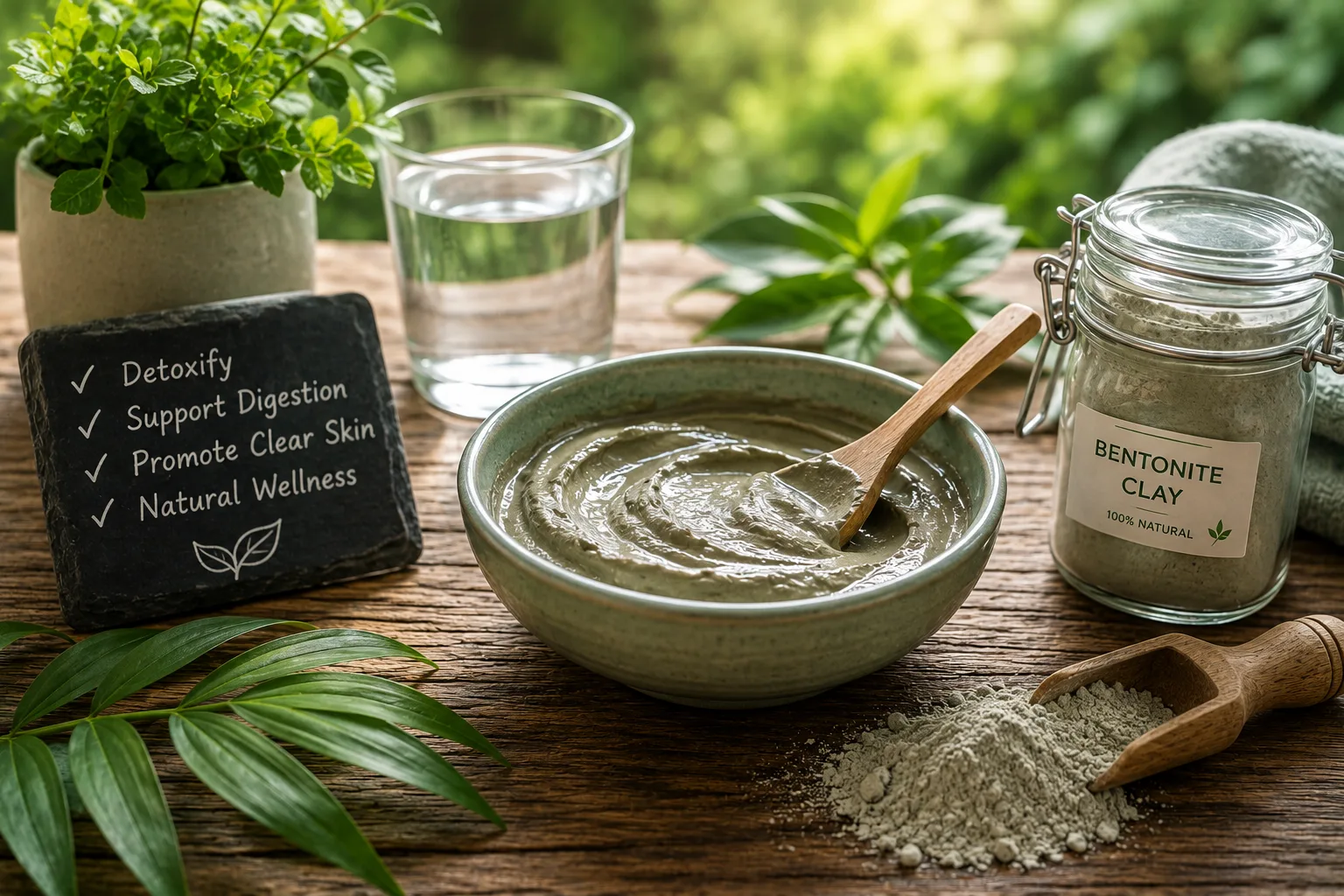
During more than 15 years of trying to recover from the health problems I associate with mercury exposure from dental amalgam fillings, I used bentonite clay both externally and internally. I added it to baths, made pastes with it and occasionally mixed a small amount into juice. I found it beneficial, especially as part of a broader effort to reduce what I was putting into my body and support its own elimination processes.
I tell the larger story of that experience in The Story I Had to Tell. Bentonite clay was not the entire answer, but it became one of the practical tools I used along the way.
People have used clay for cleansing, skin care and digestive support for centuries. Modern research has begun examining why certain clays bind particular compounds and how carefully prepared clay products might be useful. The research is interesting, but the most important thing is to understand what bentonite is, what it can reasonably do and how to choose it intelligently.
What Bentonite Clay Actually Is
Bentonite is a naturally occurring clay formed largely from altered volcanic ash. Its principal mineral is usually montmorillonite, a type of smectite clay made of extremely thin mineral layers. Those layers give bentonite an enormous surface area and the ability to swell when mixed with water.
The important word is adsorption, not absorption. Absorption means one substance soaks into another. Adsorption means molecules and ions adhere to a surface. Bentonite has a charged surface and a remarkable capacity to hold certain substances against that surface.
That does not mean bentonite travels throughout the body hunting down every toxin. Its most defensible action is local: it can bind certain compounds wherever the clay comes into direct contact with them, including on the skin or inside the digestive tract. That is still a powerful and useful property.
Why People Use Bentonite Clay
Bentonite has become popular because it is simple, inexpensive and versatile. People commonly use it in:
- Clay baths and foot baths
- Face masks and skin-cleansing products
- Pastes and poultices applied to intact skin
- Hair and scalp treatments
- Oral-care products
- Specially prepared products intended for internal use
Externally, bentonite can absorb oil and moisture, hold material against its surface and form a protective paste. That helps explain why people use it for oily skin, insect bites, minor irritation and the simple pleasure of a warm clay bath. A 2024 review of bentonite and montmorillonite for skin applications found encouraging evidence involving inflammation, wound healing, oil absorption and protection of the skin, while also making clear that clay composition and product formulation matter.
My Experience With Clay Baths and Pastes
My favourite use has always been the bentonite clay bath. I find it deeply relaxing, and I often sleep exceptionally well afterward. I start with a modest amount of clay in warm bathwater, mix it thoroughly and give myself time to see how my body responds.
For a face mask or external paste, you can mix the clay with enough water to produce a smooth, peanut-butter-like consistency. It can then be spread over the desired area and allowed to remain moist for a period of time before being rinsed away. A clean cloth or loose wrap can help keep a poultice in place.
Use glass, wood or food-safe plastic when mixing clay. More importantly, prepare only what you need, keep the product dry between uses and avoid contaminating the original container.
What Human Research Has Found
One of the more interesting areas of research involves aflatoxin, a toxin produced by certain moulds that can contaminate food. In a randomized, double-blind, placebo-controlled human trial, 234 adults received a carefully refined calcium montmorillonite product or a placebo for three months. The low-dose group showed a significant reduction in a blood biomarker of aflatoxin exposure, while adverse-event rates and routine blood measurements were similar among the groups.
That study did not prove that every bentonite product removes every toxin. It demonstrated something more specific and useful: a refined and tested montmorillonite clay was capable of reducing the bioavailability of one particular dietary toxin under controlled conditions.
This is where bentonite research is strongest. Its binding capacity is real, but the result depends on the type of clay, how it has been processed, what substance is being targeted and where the contact occurs.
Internal Use Requires a Better Product
I do not treat every bag or jar of clay as interchangeable. A product sold for pottery, gardening, industrial work or external cosmetic use is not automatically suitable for swallowing. Anyone considering internal use should look for a product specifically labelled for that purpose and supported by independent testing for lead, arsenic, cadmium, mercury and microbial contamination.
Because bentonite binds other substances, it can also bind something you want your body to absorb. Human pharmacology research has shown that bentonite can interfere with the absorption of some medications when they are taken together. I therefore keep clay well separated from medications and supplements.
Hydration also matters. Bentonite swells in water and can contribute to constipation, especially when too much is used. I believe in starting small, drinking adequate water, paying attention to bowel function and stopping if the body is clearly unhappy. More is not automatically better.
Product Quality Matters
Clay comes from the earth, which means naturally occurring metals may be present as impurities. That is not a reason to dismiss bentonite; it is a reason to buy it intelligently. Health Canada’s guidance on heavy-metal impurities in cosmetics illustrates why naturally sourced mineral ingredients require careful quality control.
I look for a reputable supplier willing to provide current laboratory results or a certificate of analysis. A clean label and attractive packaging are not substitutes for testing.
My Bottom Line
I do not need bentonite clay to be a miracle cure for it to be valuable. It is a natural material with unusual binding properties, a long history of traditional use and a growing body of modern research. I have used it in several ways and found it particularly worthwhile for baths, external applications and as one part of my personal approach to detoxification.
The sensible approach is simple: choose a properly tested product, understand whether it is intended for external or internal use, start slowly and pay attention to how your own body responds.
Bentonite clay is not the whole answer. Nothing is. But it can be one more useful tool for people who are willing to learn, experiment carefully and take an active role in their own health.
To your health—and Insure Your Health Yourself!

Hey Dr. Thrasher
you give some good advice
thanks for your hard work
mike oconnell